
 (713) 221-6800
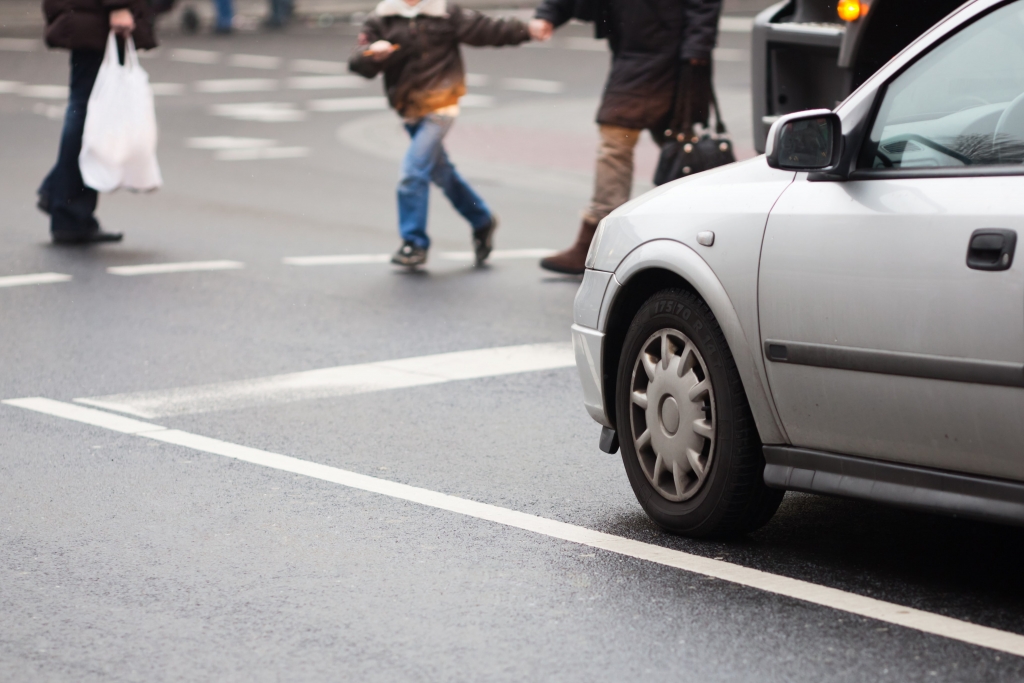
Do Pedestrians Always Have the Right of Way in Texas?
Pedestrians often – but not always – have the right of way in Texas. It depends on the specific circumstances. However, in general, Texas Transportation Code § 552.008 places a duty on drivers to always exercise due care to avoid collisions with pedestrians. They must honk their horns to warn pedestrians (if necessary). They must also use “proper precaution” when they observe a child or “obviously confused or incapacitated person” on the road way.
Right of way laws in Texas. A personal injury lawyer can investigate whether a driver violated Texas’ right of way laws. Under those laws, drivers must yield to pedestrians who are in marked or unmarked crosswalks, on the same half of the roadway as the vehicle or approaching that half from the opposite side of the roadway.
Unfortunately, drivers in Houston and throughout Texas frequently fail to recognize or simply ignore when pedestrians have the right of way. Their careless and reckless actions can carry devastating consequences. Pedestrian accident victims often suffer life-changing injuries. Many of them die from the impact.
If you believe that a negligent driver harmed you or caused the loss of a loved one in a pedestrian accident in Houston or elsewhere in Texas, the attorneys of Fleming Law can help you. We will conduct an immediate investigation to determine whether a driver violated the right of way, and we will aggressively pursue all compensation that you and your family are due. Contact us today to learn more in a free consultation.
How Often Do Pedestrian Accidents Happen in Texas?
It is crucial for pedestrians and motor vehicle drivers alike to have a solid understanding of the right-of-way rules in Texas. Knowing and respecting these rules can go a long way towards the prevention of collisions that affect far too many lives every year in our state. In fact, according to the Texas Department of Transportation, during the five-year period between 2013 and 2017:
- 27,723 pedestrian accidents occurred in Texas (5,545 per year on average)
- 2,808 of those accidents were fatal (562 per year)
- 5,385 of the crashes resulted in suspected serious injuries (1,077 per year).
Pedestrian accidents are especially a problem in Houston. As a recent Houston Chronicle study found, Houston has the fifth-highest “danger ranking” for pedestrians among the country’s 12 largest metro areas. Street design and urban planning clearly are factors. Measures such as the formation of the Houston Walkable Places Committee may, eventually, improve safety for pedestrians. Still, no matter how a street is designed, pedestrians and motor vehicle drivers alike still need to know and follow the state’s right-of-way rules.
Do Drivers Always Have to Yield to Pedestrians in Texas?
Motor vehicle drivers do not always have to yield to pedestrians. Instead, it depends on factors such as whether there is a traffic control signal or crosswalk. Whether the pedestrian and vehicle are on the same half of the roadway also serves as a factor in determining who has the right of way.
Under the Texas Transportation Code, drivers must yield to pedestrians when:
- A pedestrian control signal displays “Walk,” and a pedestrian crosses the roadway in a crosswalk, going in the direction of the signal.
- A pedestrian uses a marked or unmarked crosswalk and goes in the direction of a green traffic light signal.
- A pedestrian crosses the street within a crosswalk and is in the same half of the roadway as the vehicle.
- A pedestrian uses a crosswalk and approaches closely enough from the opposite side of the roadway to be in danger.
- A vehicle emerges from an alley, building, private road or driveway and encounters a pedestrian who is walking on a sidewalk that crosses the alley, building, private road or driveway.
Texas law also requires a driver to take necessary precautions to avoid causing injury or danger to a pedestrian who is crossing or attempting to use a crosswalk with the assistance of an animal or a white cane. If bringing the vehicle to a complete stop is the only way to avoid hitting the blind or otherwise disabled pedestrian, then the driver must do so.
Finally, when a driver approaches the rear of a vehicle that has lawfully stopped and yielded to a pedestrian, the driver cannot pass the stopped vehicle.
Drivers’ Duty to Avoid Pedestrians Under State Law
In addition to following all the right-of-way rules, motor vehicle operators in Texas are also expected to exercise due care while driving in order to avoid striking any pedestrian who is on or near an active roadway. This requirement is outlined in Texas Transportation Code §552.008, which also establishes that drivers who see a pedestrian in the road ahead of them should sound their horn if necessary to alert the pedestrian of their vehicle’s presence, and that they should be particularly careful if they observe a child or someone who is obviously incapacitated or confused in the road ahead of them.
This law does not mean that drivers are always legally at fault for collisions with pedestrians. What it does mean, though, is that drivers are not immune from liability simply because a pedestrian ahead of them was in violation of the state’s right-of-way laws.
Essentially, this rule is an explicit manifestation of the duty of care everyone has on public roads to act reasonably and carefully around one another, both with and without regard to what the literal letter of the law says about appropriate roadway behavior. A member of our team can explain how this rule may or may not affect your civil claim during a confidential initial consultation.
When Do Pedestrians Have to Yield to Motor Vehicle Drivers in Texas?
In a wide range of situations, pedestrians in Texas must yield to motor vehicle drivers. Under the Texas Transportation Code, those situations are when:
- A pedestrian comes to an intersection with a steady red or yellow signal.
- A pedestrian faces a “Wait” or “Don’t Walk” pedestrian control signal at an intersection.
- A pedestrian tries to cross the street outside of a marked crosswalk or in an unmarked crosswalk at an intersection.
- A pedestrian crosses the street where a pedestrian tunnel or overhead crossing is available.
- A pedestrian suddenly leaves the curb or other place of safety and proceeds into a crosswalk in the path of a vehicle so close that it’s impossible for the driver to yield.
Additionally, pedestrians in Texas can cross between two adjacent intersections only when they are in a marked crosswalk. They cannot cross an intersection diagonally unless a traffic control device authorizes it.
Can Pedestrians in Texas Walk Along the Side of the Road?
Under Texas law, pedestrians can walk on the side of the road only when no adjacent sidewalk is available. In other words, if a pedestrian can use the sidewalk, the pedestrian must do so. However, if no sidewalk is provided, the pedestrian can legally walk on the side of the road as long as he or she:
- Stays to the left side of the roadway; or
- Uses the shoulder of the highway and faces oncoming traffic.
Remember: Drivers in Texas must always exercise “due care” to avoid hitting pedestrians. So, if a driver encounters a pedestrian who is walking slightly onto the roadway, the driver should take steps such as honking the horn or leaving a safe distance when passing.
What Happens If a Pedestrian Is Found at Fault for Their Own Accident?
If a pedestrian steps into a controlled crosswalk without a “WALK” signal, crosses a road without using an available pedestrian tunnel or walkway, enters a crosswalk in front of oncoming traffic, or otherwise violates Texas right-of-way laws while walking, they might be found partly or primarily at fault for any ensuing traffic collision they end up involved in. In legal terms, an injured person being partially to blame for causing their own injuries through their own misconduct is known as comparative fault.
Some states take a pure contributory negligence approach to this legal concept, under which a person who holds any amount of blame for their own accident is ineligible to seek civil restitution for related injuries. Other states take a pure comparative fault approach, under which courts can reduce the total compensation available to an injured person based on their assigned percentage of comparative fault, but cannot bar recovery altogether as long as at least one other person was also negligent.
Texas, however, is among the majority of states with a modified comparative fault system, which takes elements from both systems mentioned above. As per Texas Civil Practice and Remedies Code §§ 33.001 through 33.017, anyone found to hold more than 50 percent of the total fault for their own accident cannot recover civil compensation for losses stemming from that accident.
However, if someone holds an amount of comparative fault equal to or less than 50 percent, they can still seek restitution but would have their final damage award proportionately reduced based on the assigned percentage. For example, a pedestrian found 20 percent at fault for a traffic collision they were involved in would only be able to recover for 80 percent of their total accident-related losses.
What Can Pedestrians Do to Avoid Collisions with Motor Vehicle Drivers?
If you walk to school or work or like to walk or jog for exercise, you should take steps to enhance your safety. Here are a few suggestions:
- Wear brightly colored clothing (such as a vest with reflective material) if you are walking or running at night.
- Walk or run on the left side of the road or face oncoming traffic.
- Always cross at intersections and look left-right-left before you cross.
- Check for traffic before you step off a bus or cross the street between parked cars.
- Try to make eye contact with a driver before you cross at an intersection.
Unfortunately, no matter how safe and responsible you are, you can’t control what others do. If a careless or reckless motor vehicle driver hits you while you are walking or jogging, you should take immediate steps to protect your right to recover compensation for all physical, emotional and financial harm that you have suffered.
Are Bikers Considered Pedestrians?
In Texas, bikers are treated as motor vehicle riders – not as pedestrians. Bikers in our state enjoy the same rights as any vehicle driver. They also have the same responsibilities and must follow all of the rules of the road, including yielding to pedestrians where the law requires them to do so.
Texas has no statewide law that bans bicycle riders from using sidewalks. However, many cities have ordinances which address this issue. For instance, in Houston, bicyclists cannot use sidewalks:
- In a business district such as The Galleria or downtown area, or
- Where “no bicycling” signs are posted.
If a biker is in an area where sidewalk use is allowed, the biker must yield to pedestrians.
How Can a Lawyer Help You After a Pedestrian Accident?
If a negligent motor vehicle driver hit you or a loved one while walking, Fleming Law will aggressively pursue all compensation that you are due. As part of that process, we will take steps such as:
- Conducting a timely and thorough investigation of the collision to determine why it happened and who should be held responsible for it.
- Carefully calculating all of your damages, including past and future medical expenses, lost income, diminishment of future earning ability, pain and suffering and more.
- Identifying all sources of compensation available to you, including the negligent driver’s insurance coverage and insurance coverage of your own.
- Demanding a full and fair settlement of your pedestrian injury claim.
- Taking your case to trial if that’s what it takes to pursue what you are due.
Our attorneys are skilled and experienced litigators. We know how to prepare for success in the courtroom, which gives us leverage when we negotiate with insurance companies on behalf of our clients.
Get Help from Our Houston Pedestrian Accident Attorneys Today
If you or a family member suffered a serious injury after being hit by a car while crossing the street or walking on a sidewalk or along the road, and you have questions about your legal rights, take action now. Contact us today to receive a free and confidential consultation.


